
A few years ago, I found a letter addressed to ‘Urvi, aged 25’, written when I was 14. It began with, “You never gave up on your dreams to become an actress. And now, you have an Oscar”. Even though I’m 32 now and unfortunately do not have an Oscar, I’m glad I was dreaming big from the start. The truth was that after years of tutoring and the many sacrifices my first-generation migrant Indian parents made to get me into the top selective all girls school in Victoria, when I decided in Year 9 that my singular dream was to work in film and TV, they were understandably concerned.
I remember many family battles – my parents trying everything in their power to get me to focus on my other subjects, and me doing everything in my power to give myself unconventional ‘acting training’. I made every group assignment into an opportunity to practise performing scenes (ordering my friends to come to rehearsals at recess, lunch and after school). I copied out a 300-page book about acting by hand for months during maths class (sorry to my maths teacher!), plus I read somewhere that true actors feel deep pain so I went around trying to experience as much pain as possible (don’t recommend trying that one).
Like my school’s values, I was determined and ambitious, but unfortunately for my parents, it was in a direction they couldn’t have predicted. I remember one day an Aunty came over to help my mother convince me out of what they thought was a delirious and dangerous addiction. “People like us can’t be actors here, name one show where there is an Indian person on screen,” she said, and she had a point. Stumped, I cried and replied, “What about Bend it Like Beckham?”
“See that’s the only one and it’s not even Australian,” she responded. “No one wants an Indian Cinderella”.

Although her words seem harsh, I know now they were coming from a place of wanting to protect me from the realities of the Western screen industry. I still somehow held onto my dreams to work in the creative arts. After high school, I surprised myself by discovering and practising stand-up comedy. I realised there was so much freedom and power in being able to create my own work. I also went to uni and have had parallel careers in teaching, policy work and producing, all of which have taught me valuable lessons.
Fast forward to 2022, when ABC and Screen Australia announced their prestigious Freshblood funding program, I had been touring my first stand up solo show Urvi Went to an All Girls School and had the idea to apply for the chance to make it into a web series – especially since audiences around the nation had been appreciating the live show.
The project seemed important because it was an untold story on Australian screens… but more than that, it felt purely joyful to delve back into those simpler times. A comedy about growing up in the 2000s felt relatable to any millennial because those years were so distinct and heightened. Who doesn’t remember chokers, heavy black eyeliner, talking to your crush on MSN, trying desperately to get your hair to sit in that perfect side fringe or quiff, meltdowns in Supré or Bardot, Country Road side bags and so much more that defined that era! The added elements of being misunderstood by your migrant parents and being completely boy crazy in a girls school only added to the drama and raised the stakes for comedy.
I knew I wanted the opportunity to collaborate with a team and when I looked around, I felt blessed to see there were so many talented South Asian comics with similar, but different, life experiences that I could reach out to.
For the longest time, I viewed being Indian as something I should minimise to fit into the Australian arts scene. When I was in high school, it certainly didn’t help. Thanks to arts policy changes and the brave leadership of culturally diverse artists before me, what the arts industry values now is in some ways, radically different. Even so, the writers I reached out to – Sashi Perera, Rohan Ganju and Suren Jayemanne – had all had experiences of being the only brown person in a writers’ room, so it was a total joy to make our own exclusively brown writers’ room. And yes, we did have Pani Puri for snacks!

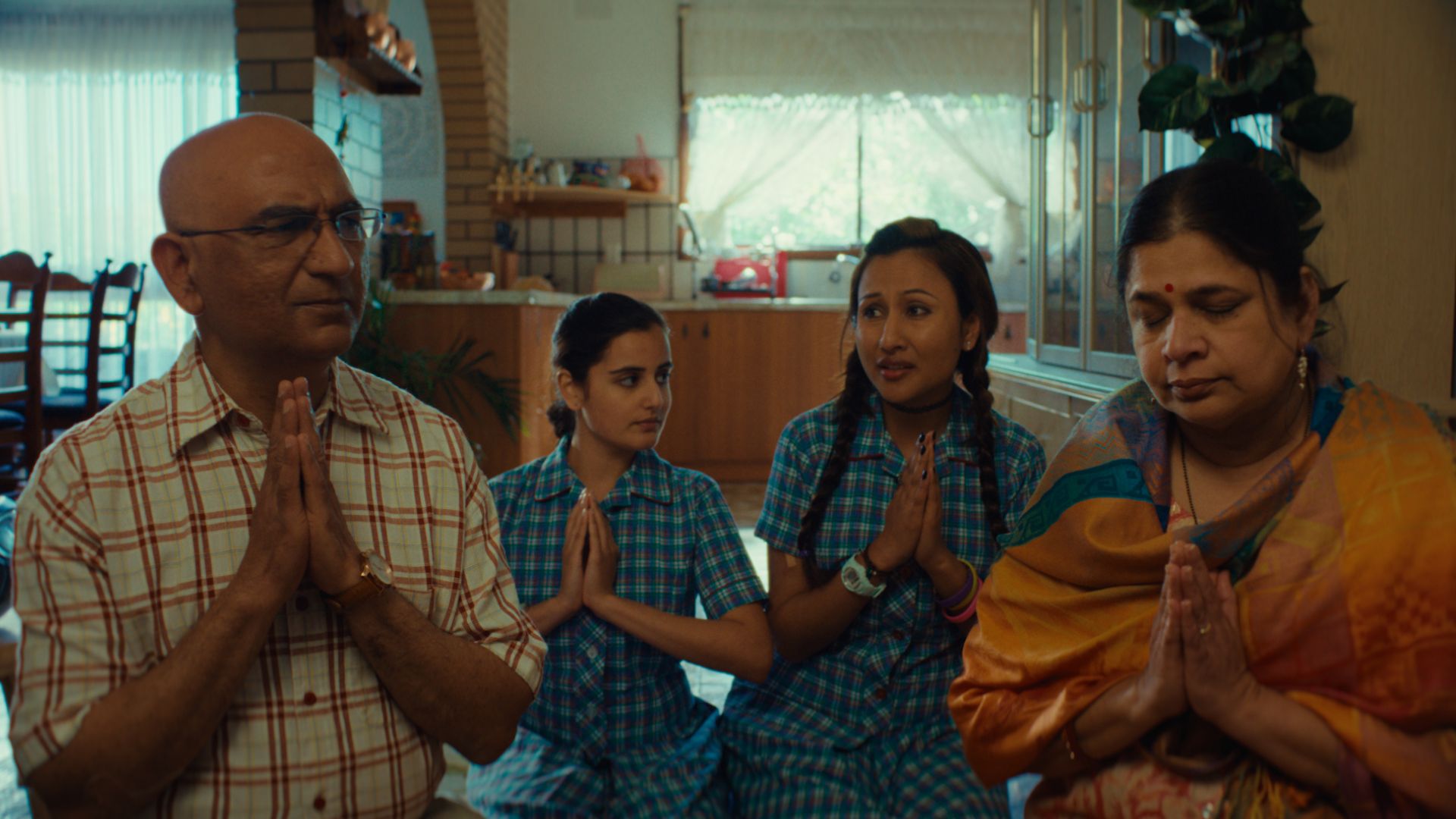
The process of adapting and recreating Urvi Went To An All Girls School for screen, first as a three-part web-series and now as a 30-minute pilot episode, has been the best experience of my career. Sashi, Rohan, Suren and I all shared our varied experiences of going to high school in 2010 to build a richer world with a multitude of funny and nuanced characters. We learnt about story and scripting from our experienced script editors Sophie Braham and Monica Zanetti. And most of all, we were mentored and guided by our director and my co-writer Nina Oyama, who has been trailblazing and paving the way for BIPOC artists in Australia for years. Together we’ve created a show set in a public selective all girls school in 2010 (probably one of the most multicultural environments you can find) and showcases some of our finest and funniest emerging talent including all our writers, Isha Desai, Karis Oka and many more.
If I were to sit 14-year-old me down today, I’d tell her, “Thank you for dreaming fiercely. I’m sorry I don’t have an Oscar. But the future is going to be even better than what you’re imagining; it’s not just you against the world, you’re going to have a whole community around you”.
Urvi Went To An All Girls School is now available to stream on ABC iview.

Top image source: Supplied


Leave a Reply